 Image 1 of 1
Riichi Mahjong 101 covers the knowledge and skills a beginner needs to play Japanese-style Mahjong. The course focuses on rules, tile recognition, how to make a hand, basic strategies, and table etiquette.
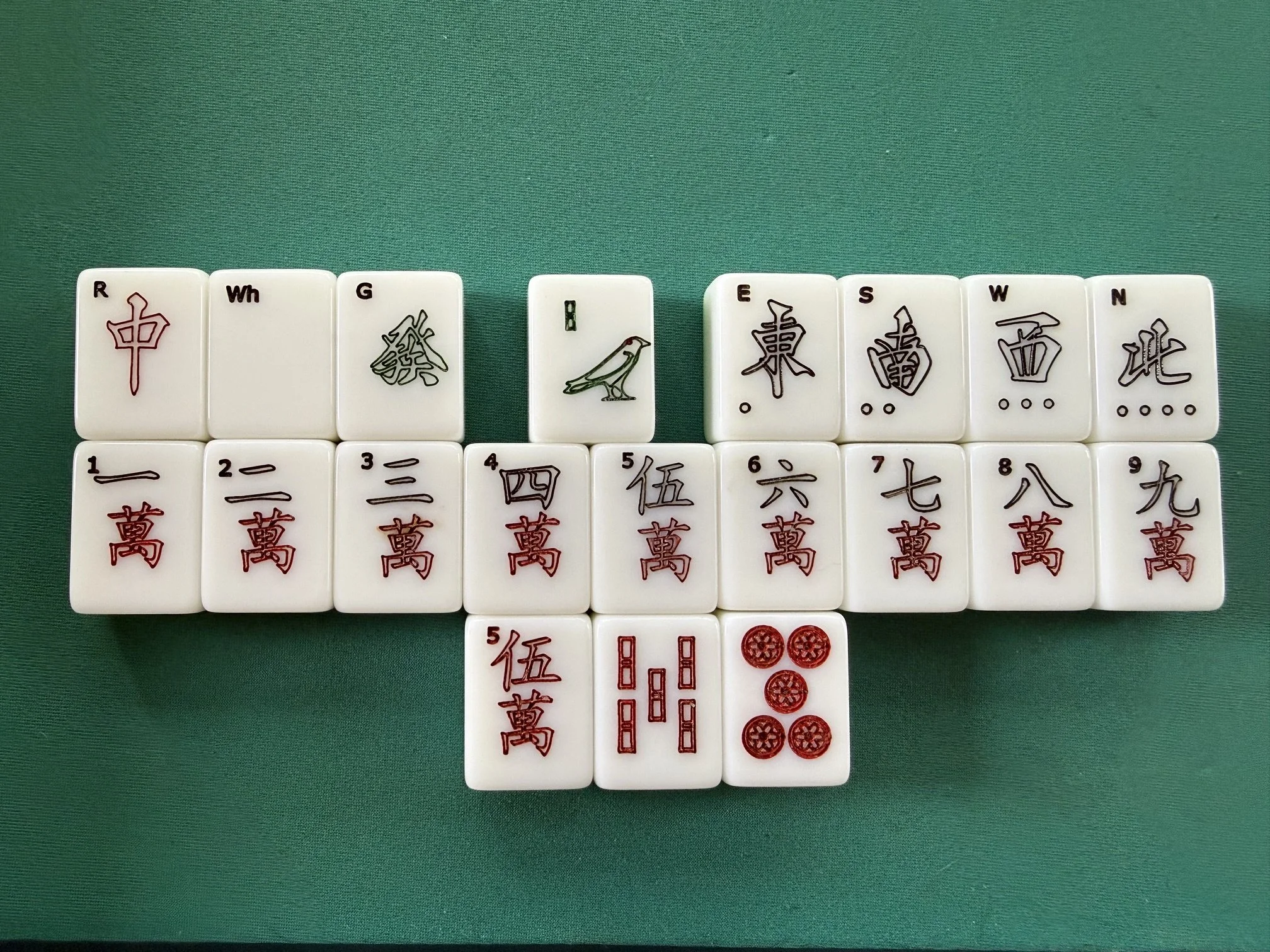
I handmade a custom beginner's tile set for us (pictured)! I labeled all the character and wind tiles with standard numbers to make it much easier to learn. :)
All materials needed to play Riichi Mahjong are provided at this class.
I will also provide a water bottle and packaged snack for each attendee along with a laminated learner sheet that you can take home.
What you’ll learn:
Tile set and notation
Names, suits, and special tiles: man (characters), pin (dots), sou (bamboo), winds, dragons, and dora indicators.
Game setup and flow
How to set up the walls and dead wall.
Dealer rotation and basic turn order.
Drawing, discarding, and the end conditions for rounds.
Making hands
The concept of melds (chi, pon, kan).
Fundamental calls and melds
How and when to call chi, pon, and kan.
By the end of Riichi Mahjong 101 you will be able to identify tiles, understand game flow, build and evaluate simple ( 4 sets of 3 and a pair) hands, and make basic calls (pon and chi). You’ll have the foundation to play casual games and can continue with 102 to learn basic scoring and when to open your hand.
Riichi Mahjong 101 covers the knowledge and skills a beginner needs to play Japanese-style Mahjong. The course focuses on rules, tile recognition, how to make a hand, basic strategies, and table etiquette.
I handmade a custom beginner's tile set for us (pictured)! I labeled all the character and wind tiles with standard numbers to make it much easier to learn. :)
All materials needed to play Riichi Mahjong are provided at this class.
I will also provide a water bottle and packaged snack for each attendee along with a laminated learner sheet that you can take home.
What you’ll learn:
Tile set and notation
Names, suits, and special tiles: man (characters), pin (dots), sou (bamboo), winds, dragons, and dora indicators.
Game setup and flow
How to set up the walls and dead wall.
Dealer rotation and basic turn order.
Drawing, discarding, and the end conditions for rounds.
Making hands
The concept of melds (chi, pon, kan).
Fundamental calls and melds
How and when to call chi, pon, and kan.
By the end of Riichi Mahjong 101 you will be able to identify tiles, understand game flow, build and evaluate simple ( 4 sets of 3 and a pair) hands, and make basic calls (pon and chi). You’ll have the foundation to play casual games and can continue with 102 to learn basic scoring and when to open your hand.