 Image 1 of 1
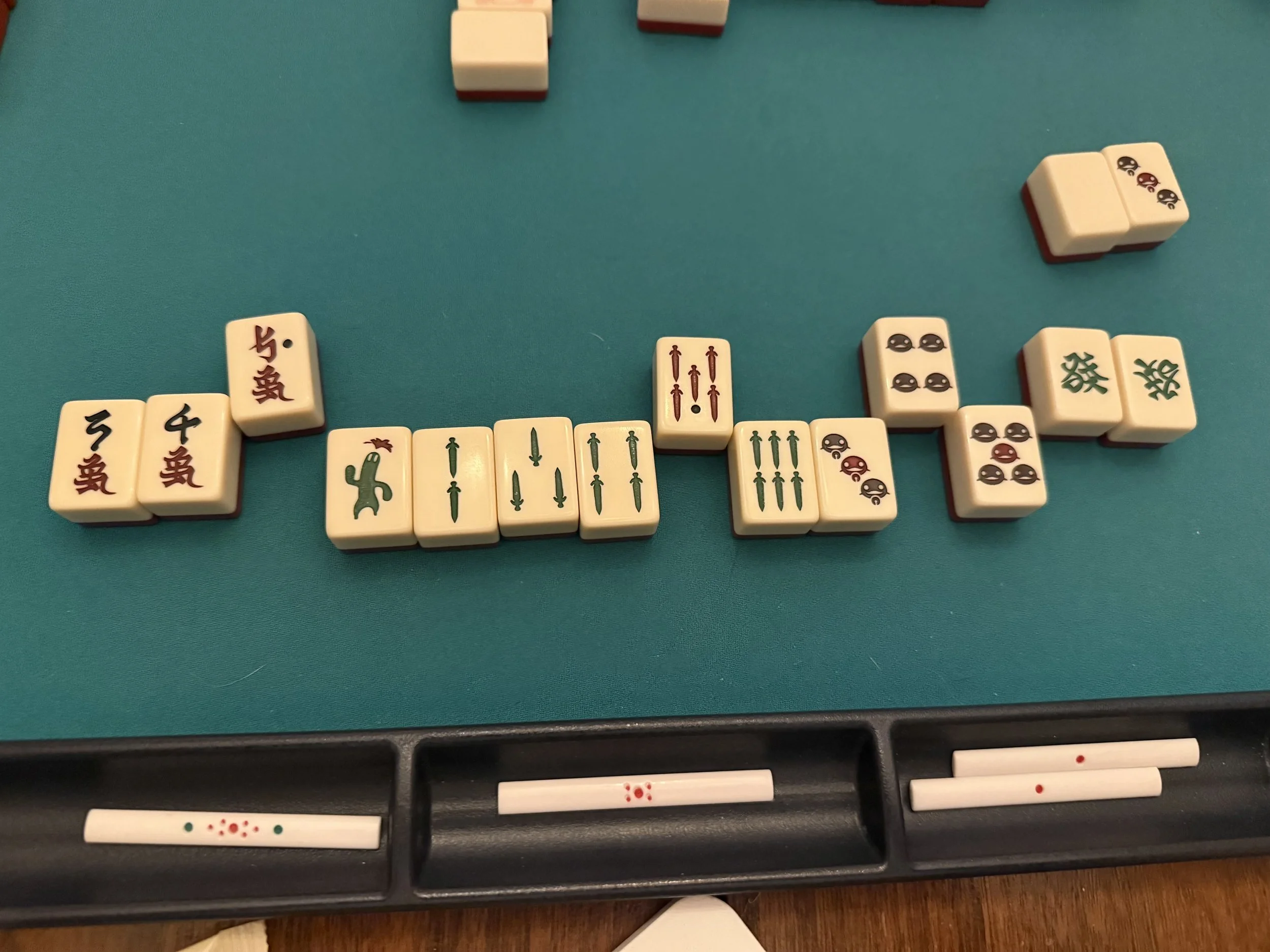
Riichi Mahjong 101 covers the essential knowledge and skills a beginner needs to play Japanese-style (riichi) mahjong confidently. The course focuses on rules, tile recognition, basic strategies, and table etiquette, structured so new players can both follow a game and make their first driven decisions.
What you’ll learn
Tile set and notation
Names, suits, and special tiles: man (characters), pin (dots), sou (bamboo), winds, dragons, and dora indicators.
Game setup and flow
How to set up the wall and dead wall.
Dealer (oya) rotation and basic turn order.
Drawing, discarding, and the end conditions for rounds.
Making hands and basic scoring concepts
The concept of melds (chi, pon, kan) and pairs.
Difference between open and closed hands and why it matters for scoring.
Fundamental calls and melds
How and when to call chi, pon, and kan.
Trade-offs of calling (open hand) versus staying closed.
Practice and next steps
Suggested drills: tile recognition, basic hand-building exercises, and reading discard patterns.
By the end of Riichi Mahjong 101 you will be able to identify tiles, understand game flow, build and evaluate simple (chicken scratch) hands, and make basic calls. You’ll have the foundation to play casual games and to continue into intermediate strategy and competitive play.
Riichi Mahjong 101 covers the essential knowledge and skills a beginner needs to play Japanese-style (riichi) mahjong confidently. The course focuses on rules, tile recognition, basic strategies, and table etiquette, structured so new players can both follow a game and make their first driven decisions.
What you’ll learn
Tile set and notation
Names, suits, and special tiles: man (characters), pin (dots), sou (bamboo), winds, dragons, and dora indicators.
Game setup and flow
How to set up the wall and dead wall.
Dealer (oya) rotation and basic turn order.
Drawing, discarding, and the end conditions for rounds.
Making hands and basic scoring concepts
The concept of melds (chi, pon, kan) and pairs.
Difference between open and closed hands and why it matters for scoring.
Fundamental calls and melds
How and when to call chi, pon, and kan.
Trade-offs of calling (open hand) versus staying closed.
Practice and next steps
Suggested drills: tile recognition, basic hand-building exercises, and reading discard patterns.
By the end of Riichi Mahjong 101 you will be able to identify tiles, understand game flow, build and evaluate simple (chicken scratch) hands, and make basic calls. You’ll have the foundation to play casual games and to continue into intermediate strategy and competitive play.